The Financial Conduct Authority regulates around 42,000 financial firms in the UK (FCA, 2026). But holding an FCA licence and actually operating under FCA rules are two different things. Some brokers route UK clients through offshore entities while waving their FCA badge on the homepage.
We checked the FCA Register directly and verified which brokers hold active FCA authorisation through their UK-incorporated entities. Every broker below has a live entry on the register, falls under FSCS protection, and serves retail clients under the FCA's leverage and negative balance protection rules.
The FCA itself makes this straightforward: "We regulate the conduct of around 42,000 businesses to ensure our financial markets are honest, competitive and fair" (FCA, 2026). For forex traders, "fair" means your broker can't manipulate prices, must segregate your funds, and faces real consequences for misconduct.
TL;DR: All 10 brokers below hold verified, active FCA authorisation. UK retail clients get FSCS protection up to £85,000 per person if a broker fails, plus negative balance protection and a maximum leverage cap of 1:30 on major forex pairs.
How Does FCA Regulation Protect Forex Traders?
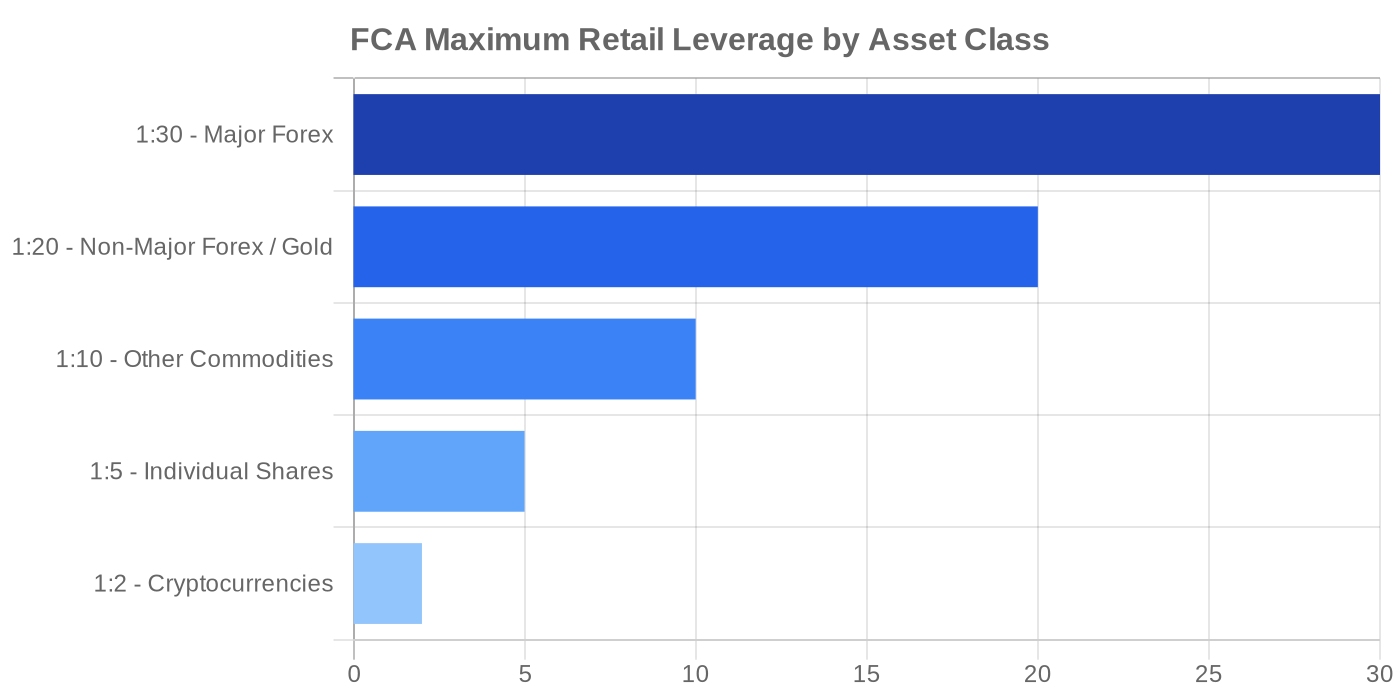
FCA-authorised brokers must follow some of the strictest rules in global forex trading. The FCA enforces a retail leverage cap of 1:30 on major currency pairs, 1:20 on non-major pairs and gold, and 1:2 on cryptocurrencies (FCA COBS 22.5, 2018).
These aren't suggestions. They're binding conditions of authorisation.
Negative balance protection means your account cannot go below zero. If a flash crash blows through your stop-loss, the broker absorbs the loss — not you. This rule exists because of events like the January 2015 Swiss franc crisis, when some traders ended up owing their brokers tens of thousands of pounds.
The Financial Services Compensation Scheme (FSCS) covers up to £85,000 per eligible person, per firm if your FCA-authorised broker becomes insolvent (FSCS, 2026). That's real money-back protection, not just a line in the terms and conditions.
FCA brokers must also keep client funds in segregated accounts, separate from company operating money. If the firm goes bust, your trading capital doesn't get swept into the insolvency proceedings.
There's also a standardised risk warning requirement. Every FCA-authorised CFD broker must display the percentage of retail accounts that lose money — typically between 70% and 82%. That transparency alone sets the FCA apart from offshore regulators where brokers can market CFDs without any risk disclosure.
The FCA also requires brokers to hold minimum capital reserves: £75,000 for limited licence holders, £150,000 for intermediary licence holders, and £750,000 for market makers (BestBrokers, 2026). These requirements mean your broker is less likely to run into liquidity problems during volatile markets.
Quick Comparison: 10 FCA Regulated Forex Brokers
| Broker | FCA Ref. No. | Min. Deposit | EUR/USD Spread | Best For |
|---|---|---|---|---|
| IG Markets | 195355 | £250 | 0.6 pips | Overall trading experience |
| Pepperstone | 684312 | £0 | 0.0 pips (Razor) | Low-cost trading |
| CMC Markets | 173730 | £0 | 0.7 pips | Range of instruments |
| eToro | 583263 | $100 | 1.0 pips | Social/copy trading |
| XTB | 522157 | £0 | 0.1 pips | Beginners & education |
| Plus500 | 509909 | £100 | 0.8 pips | Simple CFD trading |
| Capital.com | 793714 | £20 | 0.6 pips | AI-assisted analysis |
| Tickmill | 717270 | £100 | 0.0 pips (Raw) | Scalping & active trading |
| FxPro | 509956 | $100 | 0.4 pips | Multiple platforms |
| FXCM | 217689 | £300 | 0.2 pips | Algorithmic trading |
Spreads are typical and may vary by market conditions. All FCA reference numbers verified on register.fca.org.uk as of March 2026.
IG Markets — Best Overall FCA Broker
FCA Reference Number: 195355 | Entity: IG Index Ltd
IG has been operating since 1974 — longer than the FCA itself has existed. The company is listed on the London Stock Exchange (LON: IGG), which means it faces additional financial reporting requirements on top of FCA rules. That dual layer of oversight matters.
The platform offers over 17,000 markets including forex, indices, shares, and commodities. Spread betting is available alongside CFDs, which gives UK residents a tax-efficient way to trade (spread betting profits are currently exempt from Capital Gains Tax).
IG also provides a free demo account with £10,000 in virtual funds, weekend trading on select markets, and guaranteed stop-losses (for an additional premium). The ProRealTime advanced charting package is free for active traders.
Who it's best for: Experienced traders who want deep market access, strong execution, and the security of a publicly traded, FCA-regulated firm with 50+ years of operating history.
Notable drawback: The £250 minimum deposit is higher than several competitors on this list. Beginners testing the waters might find that steep. Inactivity fees also apply after two years without a trade.
Verify IG's FCA status: Check FCA Register
Pepperstone — Best for Low-Cost FCA Trading
FCA Reference Number: 684312 | Entity: Pepperstone Limited
Pepperstone's Razor account offers raw spreads from 0.0 pips with a £2.25 commission per side per lot. That works out cheaper than most competitors for active traders doing meaningful volume.
The broker supports MetaTrader 4, MetaTrader 5, cTrader, and TradingView — four platforms under one account. No minimum deposit requirement removes the barrier to entry entirely.
Execution quality is Pepperstone's real selling point. The broker routes orders through multiple tier-1 liquidity providers with no dealing desk intervention. For traders running EAs or scalping strategies, that matters more than any marketing claim about "fast execution."
Who it's best for: Active traders and scalpers who prioritise execution speed and low trading costs above everything else. Also strong for algo traders running EAs on MT4/MT5.
Notable drawback: The product range is forex and CFDs only. No share dealing, no ISAs, no spread betting. If you want a one-stop-shop for all your investing, look elsewhere.
Verify Pepperstone's FCA status: Check FCA Register
CMC Markets — Best Range of Instruments
FCA Reference Number: 173730 | Entity: CMC Markets UK plc
CMC Markets offers over 12,000 instruments — one of the widest selections among FCA-regulated brokers. The firm has been listed on the London Stock Exchange since 2016 (LON: CMCX), adding another layer of financial transparency.
The proprietary Next Generation platform includes pattern recognition tools, Reuters news integration, and client sentiment data built in. Spread betting and CFD trading are both available.
No minimum deposit means you can test the platform without committing significant capital. CMC also offers a stockbroking account for UK shares alongside the spread betting and CFD accounts — all under the same FCA-authorised entity.
Who it's best for: Traders who want access to niche markets — minor forex pairs, exotic indices, individual shares from multiple exchanges — all under FCA protection.
Notable drawback: The sheer number of features can overwhelm newer traders. The learning curve on Next Generation is steeper than simpler platforms like Plus500 or eToro. The mobile app, while functional, doesn't fully replicate the desktop experience.
Verify CMC Markets' FCA status: Check FCA Register
eToro — Best for Social and Copy Trading
FCA Reference Number: 583263 | Entity: eToro (UK) Ltd
eToro turned copy trading into a mainstream feature. Pick a trader, allocate capital, and your account mirrors their positions automatically. Over 30 million registered users globally make the social feed genuinely active rather than a ghost town.
Beyond copy trading, eToro offers real stock investing (not just CFDs) and a crypto exchange. The £100 minimum deposit and clean interface make it accessible to first-time traders.
Who it's best for: Beginners who want to learn by watching experienced traders, and anyone interested in copy trading as a hands-off approach.
Notable drawback: Spreads are wider than raw-spread brokers like Pepperstone or Tickmill. If you're a high-volume trader, those costs add up fast. There's also a $5 withdrawal fee and a $10 monthly inactivity fee after 12 months of no login. The copy trading feature also carries inherent risk — past performance of copied traders doesn't guarantee future results.
Verify eToro's FCA status: Check FCA Register
XTB — Best for Beginners and Education
FCA Reference Number: 522157 | Entity: XTB Limited
XTB's xStation platform is one of the cleanest interfaces in forex trading. Built-in educational content, market analysis, and a genuinely useful trading calculator make it a strong starting point for someone opening their first live account.
No minimum deposit, competitive spreads from 0.1 pips on EUR/USD, and a solid mobile app. XTB also won multiple industry awards for its educational materials.
Who it's best for: New traders who want strong educational support alongside a capable trading platform. Also suitable for intermediate traders who prefer a polished proprietary platform over MT4/MT5.
Notable drawback: The instrument range is smaller than IG or CMC Markets. Advanced traders may find the market coverage limiting.
Verify XTB's FCA status: Check FCA Register
Plus500 — Best for Simple CFD Trading
FCA Reference Number: 509909 | Entity: Plus500UK Ltd
Plus500 strips forex trading down to the essentials. The proprietary platform is intentionally simple — no MT4, no algorithmic trading, no overwhelming chart setups. For someone who wants to open a position, set a stop-loss, and move on with their day, it works.
The company is listed on the London Stock Exchange (LON: PLUS), publicly reporting its financials every quarter. Over 24 million registered customers as of 2024.
Who it's best for: Casual or part-time traders who want a no-frills CFD platform with strong regulatory backing. Also good for traders who find MetaTrader confusing.
Notable drawback: The simplicity cuts both ways. No MT4/MT5 support, limited charting tools, and no social trading features. Serious technical traders will feel restricted.
Verify Plus500's FCA status: Check FCA Register
Capital.com — Best for AI-Assisted Analysis
FCA Reference Number: 793714 | Entity: Capital Com (UK) Limited
Capital.com uses behavioural AI to analyse your trading patterns and flag emotional decision-making. It sounds gimmicky, but the insight reports actually surface useful data — like whether you're cutting winners too early or doubling down on losers.
Low minimum deposit of £20, competitive spreads, and over 3,000 markets. The platform integrates with TradingView for charting while keeping its own interface clean and fast.
Who it's best for: Intermediate traders interested in data-driven self-improvement. The AI insights genuinely help identify trading behaviour patterns you wouldn't spot on your own.
Notable drawback: Relatively new compared to IG or CMC Markets. Less institutional pedigree, though FCA authorisation and FSCS protection still apply.
Verify Capital.com's FCA status: Check FCA Register
Tickmill — Best for Scalping and Active Trading
FCA Reference Number: 717270 | Entity: Tickmill UK Ltd
Tickmill's Raw account delivers spreads from 0.0 pips with a £2 commission per side per lot — among the lowest all-in costs for FCA-regulated brokers. Execution speed averages under 0.20 seconds according to the broker's published data.
The broker supports MT4 and MT5 with VPS hosting available for algorithmic strategies. No requotes policy and deep liquidity from multiple tier-1 providers.
Who it's best for: Scalpers and high-frequency traders who need tight spreads, fast execution, and minimal slippage. The commission-based pricing rewards volume.
Notable drawback: The product range is narrower than full-service brokers. Around 80 forex pairs and CFDs on indices, commodities, bonds, and stocks — but no share dealing or spread betting.
Verify Tickmill's FCA status: Check FCA Register
FxPro — Best for Multiple Platform Choice
FCA Reference Number: 509956 | Entity: FxPro UK Limited
FxPro offers MT4, MT5, cTrader, and its proprietary FxPro Platform — four execution options under one account. That flexibility matters if you run automated strategies on cTrader but want MT5 for manual analysis.
Operating since 2006, FxPro has processed over 400 million orders and holds licences from the FCA, CySEC, FSCA, and SCB. The multi-regulatory setup means the firm is supervised across multiple jurisdictions.
Who it's best for: Traders who want platform flexibility without switching brokers. Also suitable for those who value multi-jurisdictional regulatory coverage.
Notable drawback: Spreads on the standard account aren't the tightest. You'll need the Raw+ account for competitive pricing, which carries a commission.
Verify FxPro's FCA status: Check FCA Register
FXCM — Best for Algorithmic Trading
FCA Reference Number: 217689 | Entity: Forex Capital Markets Limited
FXCM has been in the forex space since 1999, making it one of the longest-running online forex brokers. The Trading Station platform includes built-in strategy backtesting, and the broker actively supports API trading through REST and FIX connections.
No dealing desk execution, which means your orders go straight to liquidity providers without broker intervention. Useful for algo traders who need predictable execution.
FXCM also provides free historical tick data going back over a decade — a genuine asset for backtesting strategies. The Active Trader program offers rebates for high-volume clients, effectively reducing already competitive spreads.
Who it's best for: Algorithmic and API traders who need reliable execution, historical data access, and a broker that won't interfere with automated strategies. Also suitable for traders who want deep historical data for strategy development.
Notable drawback: The £300 minimum deposit is the highest on this list. The platform feels dated compared to newer entrants like Capital.com or XTB's xStation. Customer support quality has also been inconsistent based on user reports.
Verify FXCM's FCA status: Check FCA Register
How to Verify if a Forex Broker Is FCA Regulated
Don't take a broker's word for it. Some firms display FCA logos on their website without holding actual authorisation. Others hold an FCA licence through one entity but route clients through an offshore subsidiary. Here's how to check properly.
Step 1: Go to the FCA Register
Visit register.fca.org.uk — this is the only official source. Third-party sites can be outdated or wrong.
Step 2: Search by firm name or reference number
Type the broker's name or their FCA reference number. If the broker gave you a reference number, search that number directly. It's harder to fake a specific number than a name.
Step 3: Check the status says "Authorised"
The entry must show "Authorised" — not "Registered," "Appointed Representative," or "No longer authorised." Only "Authorised" means the firm holds a full FCA licence with permissions to hold client money.
Step 4: Verify the entity name matches your account
This is where most people get caught. A broker group might have an FCA-authorised UK entity AND an offshore entity in the Seychelles, Bermuda, or SVG. Check your account opening documents. The entity name on your contract must match the FCA-authorised firm on the register.
Step 5: Check the permitted activities
Click through to the firm's page and look at "Regulated Activities." It should include activities relevant to forex trading, such as "dealing in investments as principal" or "arranging deals in investments."
If anything doesn't match — wrong entity, expired authorisation, missing permissions — report it and find another broker. For more on why UK regulation matters, see our guide to UK regulated brokers.
Common Red Flags When Checking FCA Status
Watch for these warning signs during your verification:
- "Registered" vs "Authorised": Some firms appear on the FCA Register as "Registered" rather than "Authorised." Registered firms (like payment service providers) operate under a different, lighter regulatory framework. For forex trading, you want "Authorised."
- Clone firms: The FCA maintains a warning list of firms impersonating legitimate authorised companies. Scammers copy real FCA reference numbers and paste them on fake websites. Always click through to the firm details on the register and verify the website URL, phone number, and registered address match what the broker showed you.
- Appointed Representatives: Some entities are listed as "Appointed Representatives" of an FCA-authorised firm. This is a weaker form of oversight — the principal firm is responsible, not the FCA directly. For a forex broker, direct authorisation is what you want.
- Expired or withdrawn authorisation: Firms that lost their FCA licence still appear on the register with a "No longer authorised" status. Some keep operating under a new offshore licence while referencing their old FCA history in marketing.
What Happens If Your FCA Broker Fails?
This isn't a theoretical question. Alpari UK collapsed during the Swiss franc crisis in January 2015. Clients of FCA-regulated brokers got their money back through the FSCS. Clients of unregulated brokers didn't.
The FSCS covers up to £85,000 per eligible person, per firm (FSCS, 2026). If your broker held £60,000 of your money and went insolvent tomorrow, you'd get £60,000 back. If they held £120,000, you'd get £85,000 and join the insolvency creditor queue for the rest.
This protection applies automatically. You don't need to register or pay for it. If your broker is FCA-authorised and holds client money, FSCS coverage applies.
But — and this is the critical part — FSCS protection only applies if you're trading under the broker's FCA-authorised entity. If you signed up through their Seychelles or SVG entity (often identifiable by slightly different terms and conditions), you get zero FSCS protection. Check your account agreement. The entity name matters.
The claims process is straightforward. If your broker enters insolvency, the FSCS contacts eligible clients directly. You can also file a claim through the FSCS website. Most investment claims are resolved within 6 months.
One thing worth knowing: FSCS protection covers your deposits and any realised profits held by the broker. It does not cover open trading positions or unrealised gains. If your broker fails mid-trade, the position closes at the last available price, and your claim is based on the resulting cash balance.
For a deeper look at broker safety checks, see our investigation into whether specific brokers are safe.
What Is the Maximum Leverage With FCA Brokers?
FCA rules cap retail leverage at strict levels across asset classes:
| Asset Class | Maximum Retail Leverage |
|---|---|
| Major forex pairs | 1:30 |
| Non-major forex pairs | 1:20 |
| Gold and major indices | 1:20 |
| Other commodities and minor indices | 1:10 |
| Individual shares | 1:5 |
| Cryptocurrencies | 1:2 |
These limits were introduced in August 2018 following ESMA's intervention and the FCA's subsequent permanent measures. Before that, UK retail traders could access leverage up to 1:500 or higher. The change was designed to reduce the proportion of retail clients losing money — the FCA found that approximately 76% of retail CFD accounts lost money in 2017.
Professional clients can apply for higher leverage by meeting at least two of three criteria: sufficient trading activity (10+ significant-size trades per quarter over the past year), a portfolio exceeding €500,000, or relevant financial industry experience. But going professional means giving up FSCS protection and negative balance protection.
That trade-off is rarely worth it. The vast majority of retail traders who apply for professional status do so to access higher leverage — but higher leverage is precisely what caused them to blow accounts in the first place. The FCA introduced these limits after finding that lower leverage significantly reduced average client losses.
It's also worth noting that some FCA brokers offer different account tiers within the retail classification. Standard accounts, raw spread accounts, and premium accounts may have different fee structures, but they all operate under the same FCA leverage caps. The account tier affects your costs, not your regulatory protection.
Should You Choose an FCA Broker Over Other Regulators?
The FCA is widely considered a Tier 1 regulator alongside ASIC (Australia), BaFin (Germany), and FINMA (Switzerland). But not all Tier 1 regulators offer identical protections.
The FCA's combination of leverage caps, negative balance protection, segregated client funds, and the FSCS compensation scheme gives retail traders more protection than any other single regulatory framework.
If you're based in the UK, trading with a non-FCA broker means giving up all of these protections. You'd be relying entirely on the regulatory standards of wherever the broker is based. For brokers licensed in the Seychelles, Vanuatu, or Saint Vincent and the Grenadines, those standards are minimal to non-existent.
Even if you're outside the UK, an FCA-regulated broker entity provides a higher standard of protection than most alternatives. The trade-off is lower maximum leverage — but for the majority of retail traders, lower leverage reduces losses rather than limiting profits.
Here's how the FCA stacks up against other Tier 1 regulators on the protections that matter most:
| Protection | FCA (UK) | ASIC (Australia) | CySEC (EU/Cyprus) |
|---|---|---|---|
| Compensation scheme | £85,000 (FSCS) | None for forex | €20,000 (ICF) |
| Negative balance protection | Mandatory | Mandatory | Mandatory |
| Segregated client funds | Required | Required | Required |
| Max retail leverage (forex) | 1:30 | 1:30 | 1:30 |
| Risk warning requirement | Yes (% of losing accounts) | Yes | Yes |
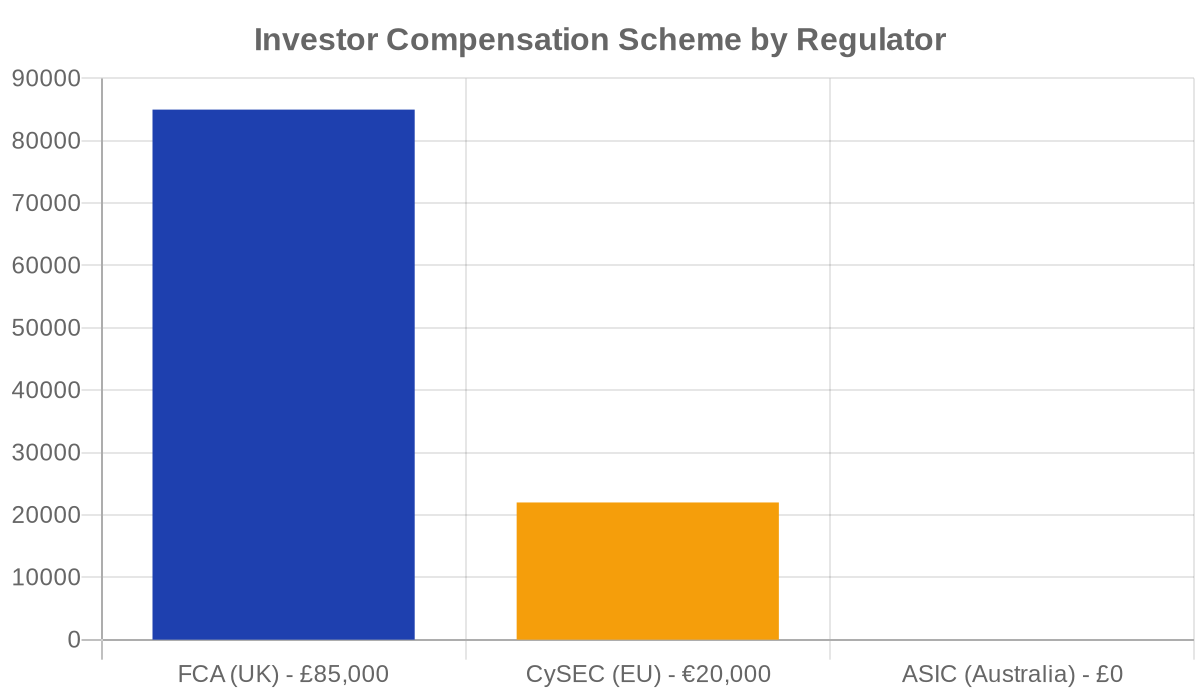
The compensation scheme is the biggest differentiator. If your ASIC-regulated broker fails, there's no government-backed fund to return your money. CySEC's Investor Compensation Fund caps at €20,000 — less than a quarter of the FCA's £85,000 limit. For a broader perspective on regulation worldwide, see our overview of UK regulated brokers and individual broker safety investigations.
How We Selected These FCA Regulated Brokers
Every broker on this list was verified through a three-step process. First, we confirmed active "Authorised" status on the FCA Register as of March 2026. Second, we checked that the UK entity — not an offshore subsidiary — is the one serving UK retail clients. Third, we evaluated each broker on trading costs, platform quality, market range, and suitability for different trader profiles.
We deliberately excluded brokers that hold FCA authorisation but primarily route UK clients through non-UK entities. We also excluded brokers whose FCA authorisation covers only limited activities (like payment processing) rather than dealing in investments.
This list is not exhaustive. The FCA register includes dozens of authorised forex brokers. These 10 represent a cross-section of the market covering different needs — from low-cost scalping to social trading to algorithmic execution. If you're looking for a broker not listed here, run them through the verification steps above before opening an account.
The Bottom Line on FCA Regulated Forex Brokers
FCA regulation remains the gold standard for retail forex trader protection in 2026. The combination of the £85,000 FSCS safety net, mandatory negative balance protection, and segregated client funds means UK traders have more safeguards than almost any other jurisdiction offers. Every broker on this list holds verified, active FCA authorisation — but always confirm on the FCA Register before depositing funds. If you're unsure where to start, IG Markets and CMC Markets offer the deepest market access with the longest FCA-regulated track records, while Pepperstone and Tickmill deliver the lowest trading costs. Check our guide to UK broker regulation for more on how FCA oversight works in practice.
Frequently Asked Questions
How do I check if a forex broker is FCA regulated?
Go directly to the FCA Register and search by the broker's name or FCA reference number. Confirm the status shows "Authorised" and that the entity name matches your account documents. Don't rely on the broker's own website or third-party directories — only the FCA Register is authoritative.
What happens if my FCA regulated broker goes bankrupt?
The Financial Services Compensation Scheme (FSCS) protects eligible clients up to £85,000 per person, per firm. This applies automatically if your broker is FCA-authorised and holds client money. You don't need to register for FSCS protection separately — it's a condition of FCA authorisation.
What is the maximum leverage for FCA regulated forex brokers?
Retail traders are limited to 1:30 on major forex pairs, 1:20 on non-major pairs and gold, 1:10 on other commodities, 1:5 on shares, and 1:2 on cryptocurrencies. Professional clients can access higher leverage but lose FSCS compensation and negative balance protection.
Are FCA regulated brokers better than CySEC or ASIC brokers?
Each regulator has strengths. FCA and ASIC are both Tier 1 regulators with high standards. The FCA's key advantage is the £85,000 FSCS compensation scheme — CySEC's equivalent (ICF) covers only €20,000, and ASIC has no equivalent compensation fund for forex traders. For maximum consumer protection, FCA is hard to beat.
Can I trade forex in the UK without using an FCA regulated broker?
Technically yes — no law prevents UK residents from opening accounts with offshore brokers. But doing so means no FSCS protection, no FCA leverage limits, no guaranteed negative balance protection, and no recourse through the Financial Ombudsman if something goes wrong. The risks significantly outweigh any benefit of higher leverage.