
Key Takeaways
- The youngest documented case, Ref Wayne, reached his first million at nineteen after starting at sixteen.
- Each one of them had a mentor or a trading community correcting their mistakes early.
- Five of the six came out of South Africa, roughly between 2013 and 2019.
- Most ran a course, book, or training business beside their positions, so the headline figures are not accurate market returns.
- None of them went from beginner to seven figures in less than three years.
Most forex young millionaires on this list began with a mentor and a nominal account. One failed his school exams, while another was selling SIM cards at sixteen. They spent years learning before they made any money.
Six people qualified for this list on three conditions: Each started before turning twenty-five or within a year of leaving education. Each has had their wealth reported by an independent outlet, not just by their own business. And each has enough of the journey on record to be useful. Here, we trace their journeys, backgrounds, and motivations.
Who Are the Forex Young Millionaires?
Forex young millionaires are retail traders who achieve seven figures early on, usually in their twenties, and they are outliers rather than a career path. Regulator-mandated broker disclosures put retail CFD loss rates between 74% and 89% as of 2026. The six below are what the far tail looks like.
Each had a coach or a peer group correcting them early. And most earned as much from teaching the craft as from practicing it.
Six Forex Young Millionaires at a Glance
Only 3 of the 6 have a documented age at their first million: 19, 21 and 24. The other three are reported as "in their twenties" or with no date at all. The table sets every route side by side.
| Trader | Country | Started | Reported milestone | Main income sources |
|---|---|---|---|---|
| Sandile Shezi | South Africa | Teens | Above $2.3 million by 24 | Trading + Global Forex Institute |
| Ref Wayne | South Africa | Age 16 | First million at 19; R2.4bn by 22 | Trading + Pip Coin + education |
| Jabulani Ngcobo | South Africa | Twenties | Around $2 million as of 2019 | Trading + book + property |
| Louis Tshakoane | South Africa | Twenties | Around $2 million in book sales | Book sales + gym + trading |
| Nelisiwe Masango | South Africa | College | Multi-million in her twenties | Trading + three businesses |
| Dan Legg | United Kingdom | Age 17 | Millionaire at 21 | Trading + courses |
None of these has a documented income stream that is absolutely market returns.
Which South African Traders Made Forex Millions?
Five of the six came out of South Africa, hitting their reported milestones between 2013 and 2019. Their stories are still talked about across the trading education industry a decade later. Currency volatility, accessible broker infrastructure, and an appetite for financial independence served as the major motivators for each.
1. Sandile Shezi - From Township Streets to the Global Forex Institute
Sandile Shezi grew up in Umlazi, one of Durban's poorest townships. Born in 1993, he was selling muffins and second-hand clothing on the street from age twelve. With no formal financial education, he learned markets through articles written by mining entrepreneur Zandile Zugu and seminars run by trading coach George van der Riet. By the age of twenty-four, his net worth reportedly surpassed $2.3 million.
Apart from his own trading, Shezi founded the Global Forex Institute, a training company that transformed his knowledge into a second income stream, a combination that recurs across this group.
2. Ref Wayne - From SIM Cards to a Reported R2.4 Billion by 22
Ref Wayne grew up in Meadowlands, outside Johannesburg, selling SIM cards at the age of sixteen. A mentor named David Schwarz introduced him to forex and cryptocurrency, and Wayne progressed fast: first million at the age of nineteen, and by the time he was twenty-two, he had a reported net worth above R2.4 billion (South African Rand). Estimates from that period put the USD equivalent around $130 million. He also developed Pip Coin, one of the first African-built cryptocurrencies.
He followed David Schwarz, who already knew what he was doing, and that advantage reduced years of trial-and-error into months.
3. Jabulani Ngcobo - the Author Who Put It in Writing
Jabulani Ngcobo was born in Durban in 1985, making him the oldest here and probably the most illustrative, because his path is the slow-burn version. His estimated net worth as of 2019 was around $2 million. What separates him is Cashflow Naked, a financial education book meant for people from disadvantaged communities, and Cashflow Properties, built alongside his trading.
Ngcobo compounded outward rather than upward, redirecting profits into property and education instead of larger positions. He is more than a "billionaire at twenty-two" and closer to how sustainable forex wealth works.
4. Louis Jr. Tshakoane - From Gym Ownership to Forex Bestseller
Louis Tshakoane did not start from poverty. He came from a comfortable background and launched Botho Gym with support from Richard Branson's Virgin Group, specifically to keep young people away from drugs and crime. Later on, he moved into crypto and forex, and wrote Forex Millionaire in 365 Days, which reportedly generated around $2 million in sales.
He never disclosed a trading-derived net worth. The book figure is the only documented number attached to his name.
5. Nelisiwe Masango - Pre-Med Student Turned Forex Trader
Nelisiwe Masango had a planned medical career when she started college near Johannesburg. She dropped out after the first year to trade forex full-time, built a multi-million-dollar net worth in her twenties, and developed three businesses. Her motivation didn't come from poverty or failure but from changing direction.
Since then, she became a prominent figure in South Africa's financial education community, placing her alongside Shezi and Ngcobo: trading success supplemented by education and media income.
Are There Young Forex Millionaires Outside South Africa?
Yes, but the cases are few: only 1 of the 6 documented here comes from outside South Africa, and the reason is coverage rather than talent. Those stories came out when social media made individual results visible and local education companies had a commercial reason to amplify them. The UK produced the clearest comparable case.
6. Dan Legg - Millionaire at 21 After Failing His A-Levels
Dan Legg failed his A-levels at seventeen and taught himself forex through YouTube, working from a trading community there. By the age of twenty-one, he had accumulated enough to be counted among the UK's youngest forex millionaires. Later, he built a teaching business on the same model as Shezi.
The A-levels detail appears in every write-up because it contradicts the assumption that financial expertise requires formal credentials. What it required was nearly four years of self-teaching and a string of bad trades.
What Do Successful Young Forex Traders Have in Common?
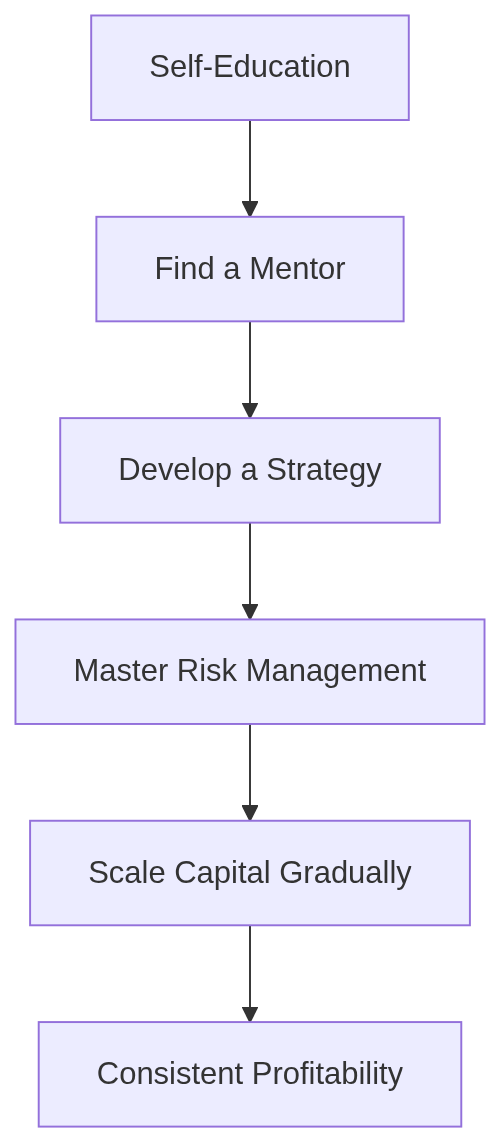
Certain patterns repeat across all six profiles.
-
All of them went from beginner to seven figures in three years or more. Ref Wayne started at sixteen and hit his first million at nineteen, the fastest case here.
-
Each of them worked with a mentor rather than relying only on reading. Wayne had David Schwarz. Legg had the YouTube trading community. Shezi had van der Riet's seminars. Self-teaching featured in every path, but no one here operated alone.
-
All six treated risk management as a foundation. They had position-sizing frameworks and loss limits in place before trading larger amounts. In practice, this is how retail accounts are different from the ones that survive: the rules exist on paper but get abandoned during the first drawdown.
When our team walks beginners through their first funded account, the rule that breaks first is generally the stop-loss. People will sit through a losing position for hours rather than accept a defined loss they agreed to twenty minutes earlier. That gap between a rule on paper and a rule under pressure is the part the social media stories never tell.
-
Five of the six listed a book, course, or training business. Teaching compels a person to systematise what they know, and it creates a second income stream that decreases reliance on live trading performance.
The last one is patience. Masango prepared before dropping out; Ngcobo compounded into property over years. When outlets write about forex young millionaires, they count trading income and net worth together and don't really separate what is gained from positions versus what is gained from selling courses about them. In some cases, that revenue may well exceed the trading outcome.
Paul Tudor Jones, who built Tudor Investment Corporation from a commodities floor into a multi-billion-dollar fund, has made the same point for decades:
"The most important rule of trading is to play great defense, not great offense."
— Paul Tudor Jones, founder of Tudor Investment Corporation
Each trader here reached that lesson the expensive way, and reached it before the money arrived rather than after.
Can Forex Trading Make You a Millionaire?
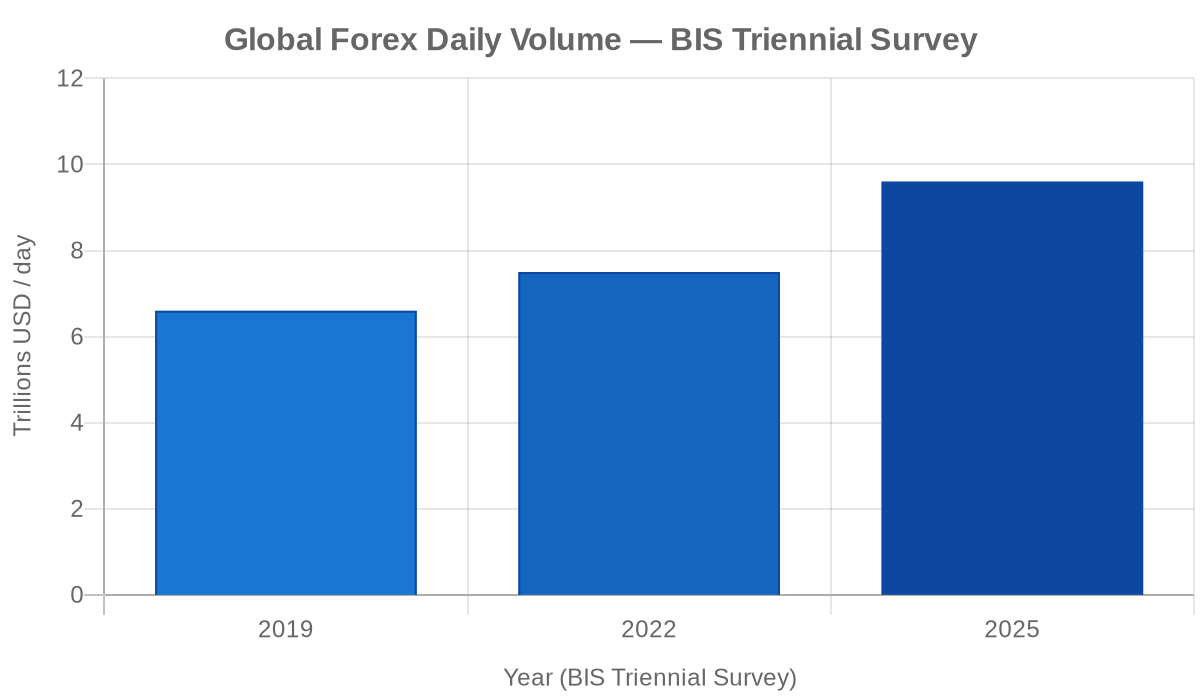
It is possible, even if the odds in the beginning are against you. The foreign exchange market trades $9.6 trillion per day as of April 2025, up from $6.6 trillion in 2019 (BIS Triennial Survey). At this scale, a modest and consistent edge builds into good money.
Set these six against the loss-rate range from the opening section, and the shape of the problem is clear. They are the far tail. Most people who opened retail accounts in the same period stopped within a few years. The problem here is not accessibility, but the skill gap between opening an account and trading profitably, and closing it takes time. Before funding anything, you must compare regulated broker options with proper ESMA or FCA oversight.
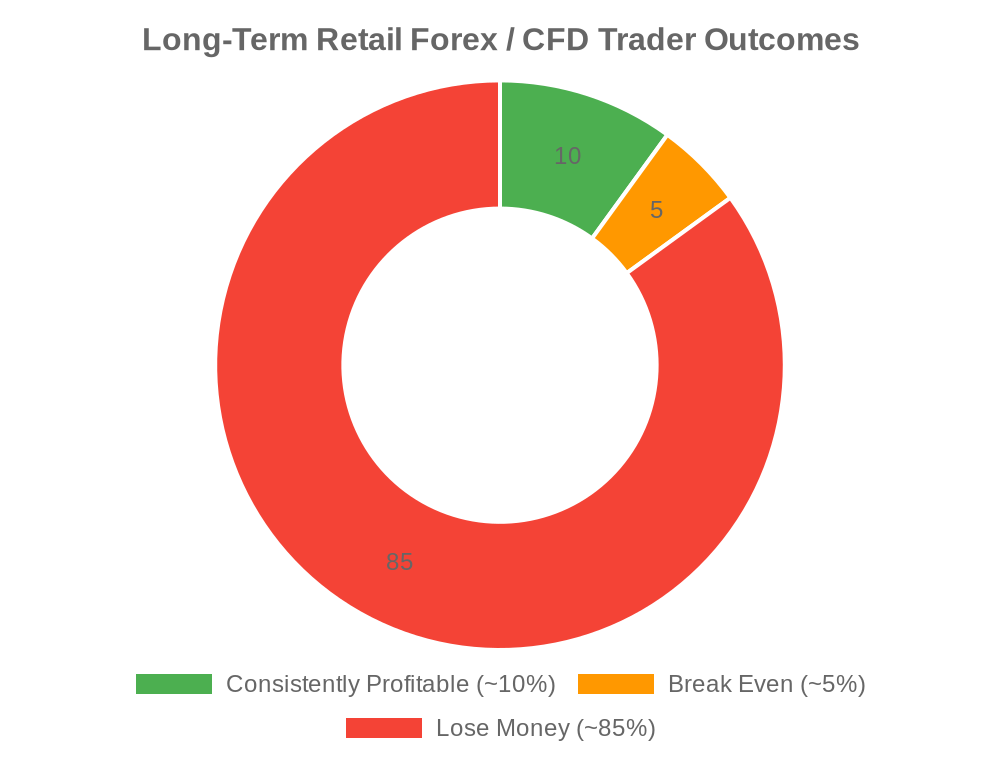
Sources: ESMA, AMF
The Bottom Line
Forex young millionaires exist, and they are built over several years rather than a few months. The six profiled here succeeded through mentorship, risk discipline, and the patience to keep learning through losses. Most of them also built education businesses alongside their trading, which is one important qualifier to know before reading their wealth figures.
It's time, mentorship quality, and a written risk framework that separate this group from the majority, not talent as people would assume. If you are starting out, work through it before putting your capital at risk.
Frequently Asked Questions
Who is the youngest forex millionaire in the world?
While there is no independently audited ranking, Ref Wayne, a South African trader who began at sixteen, is the name most often cited, reportedly reaching his first million at nineteen. Any figure attached to him, including the widely quoted R2.4 billion, bundles cryptocurrency and education income with trading returns.
Can you become a millionaire from forex trading starting with a small account?
It is possible and typically takes several years. Every documented trader in this category started with limited capital and grew it through disciplined position sizing rather than large speculative bets. The sequence that repeats is proving consistent profitability on a low balance first, then scaling capital into a method that already works. Funding a large account before the method is proven is the most common way small accounts are lost.
What percentage of forex traders actually become millionaires?
No reliable figure exists, because brokers are not required to publish net worth outcomes and self-reported results cannot be verified. The available data measures the opposite end: regulator-mandated disclosures show between 74% and 89% of retail CFD accounts lose money over the reporting period, as per ESMA. Any specific percentage claiming to quantify forex millionaires is usually just marketing, as millionaire-level outcomes form a very small percentage of the trading population.
What trading strategies did forex young millionaires use?
Strategies varied widely among them. Sandile Shezi focused on high-risk, high-reward price action and reading momentum from raw chart structure. On the other hand, Ref Wayne leaned on fundamental analysis and central bank policy shifts. The common thread is their commitment, held long enough to build a meaningful sample.
Are forex trading success stories reliable learning resources?
See them as motivation, rather than blueprints. Documented millionaire profiles are usually credible on the biographical facts. What they compress is time, and what they omit is the same pair of things: the long losing phase before the method worked, and the education income that paid the bills during it. Reading one critically means asking which money came from positions and which came from selling courses.
