
Key Takeaways
- The reasons to trade forex: It is the largest financial market on earth, with liquidity, 24/5 access, low transaction costs, and two-way positions without borrowing costs.
- The failure rate also needs to be noted, and the regulator publishes it. Many retail CFD accounts lose money.
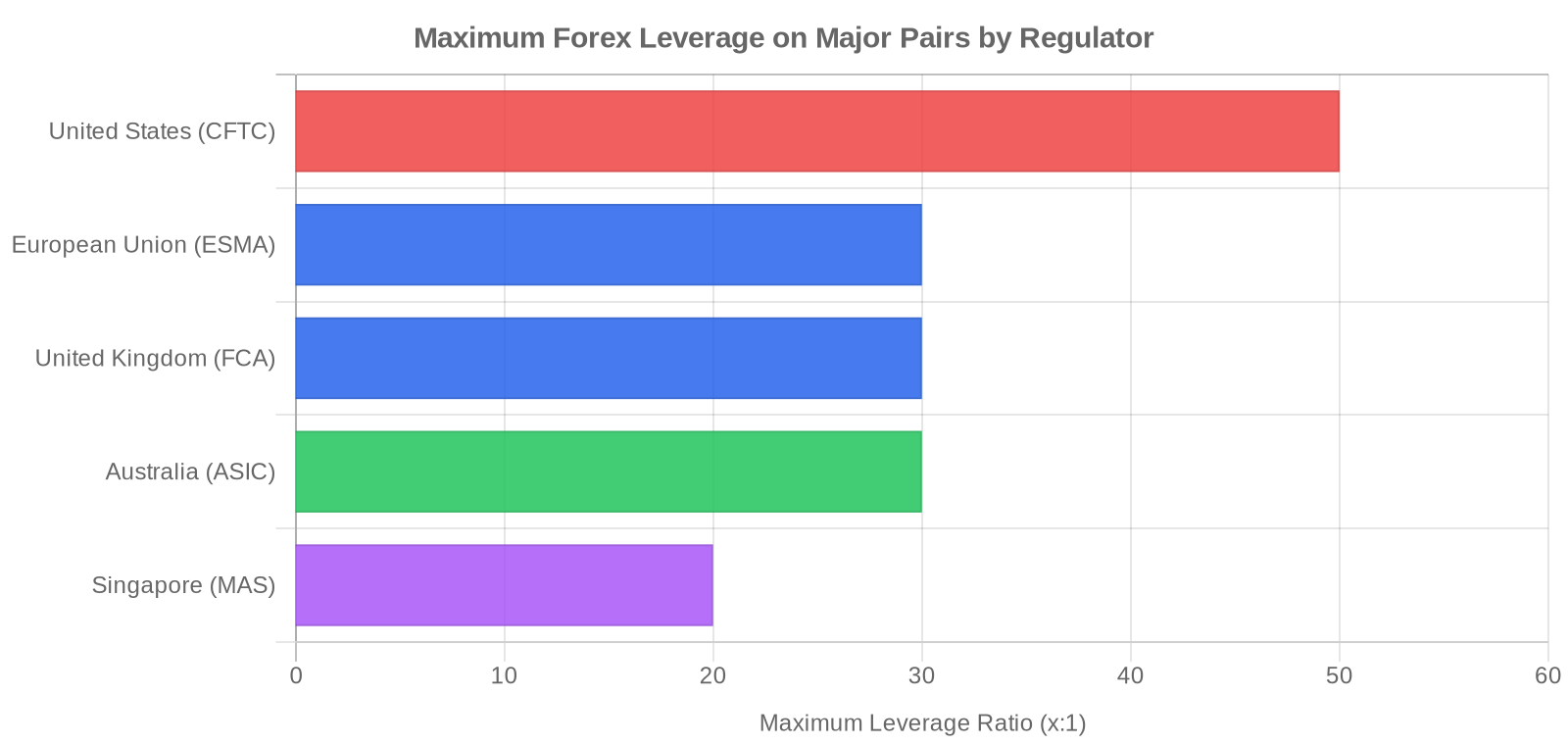
- Leverage is the single biggest cause of blow-ups. Caps of 30:1 and 50:1 are its ceilings.
- Costs are low, and they include overnight financing that many "tight spread" marketing materials do not mention.
- If it suits shorter-term actively managed trading, it is a poor vehicle for long-term wealth building.
If you have been searching for reasons to trade forex, you have probably already seen many glossy statements on many brokers' websites, like 'tight spreads', 'minimal costs', '24/7 access', etc. All these are generally presented without the part that matters the most.
To begin with, around 74% and 89% of retail CFD accounts lose money when trading forex, according to ESMA's published supervision data across multiple regulated providers. This is the number published by the regulator and updated across reporting periods. It covers CFD accounts specifically; that is how many retail traders outside the US access forex. Spot currency trading through a bank or FX broker is a different product with separate leverage caps.
This article talks about the structural advantages as well as the failure rate.
What Makes Forex Different from Every Other Financial Market?
The foreign exchange market handles $9.6 trillion in daily trading volume as of April 2025, nearly 28% more than the $7.5 trillion recorded in 2022. This figure makes forex larger than global equities, bonds and commodities markets combined, and the scale produces the advantages below:
The structure is somewhat unusual as there is no central exchange. Trades happen over-the-counter through a network of banks, institutions and electronic broking systems, and the US dollar sits on one side of 89% of all currency trades globally, per BIS survey.
That is both a feature and a quirk. It keeps costs low and the market open around the clock, but prices vary slightly between brokers, and there is no single global regulator overseeing every transaction.
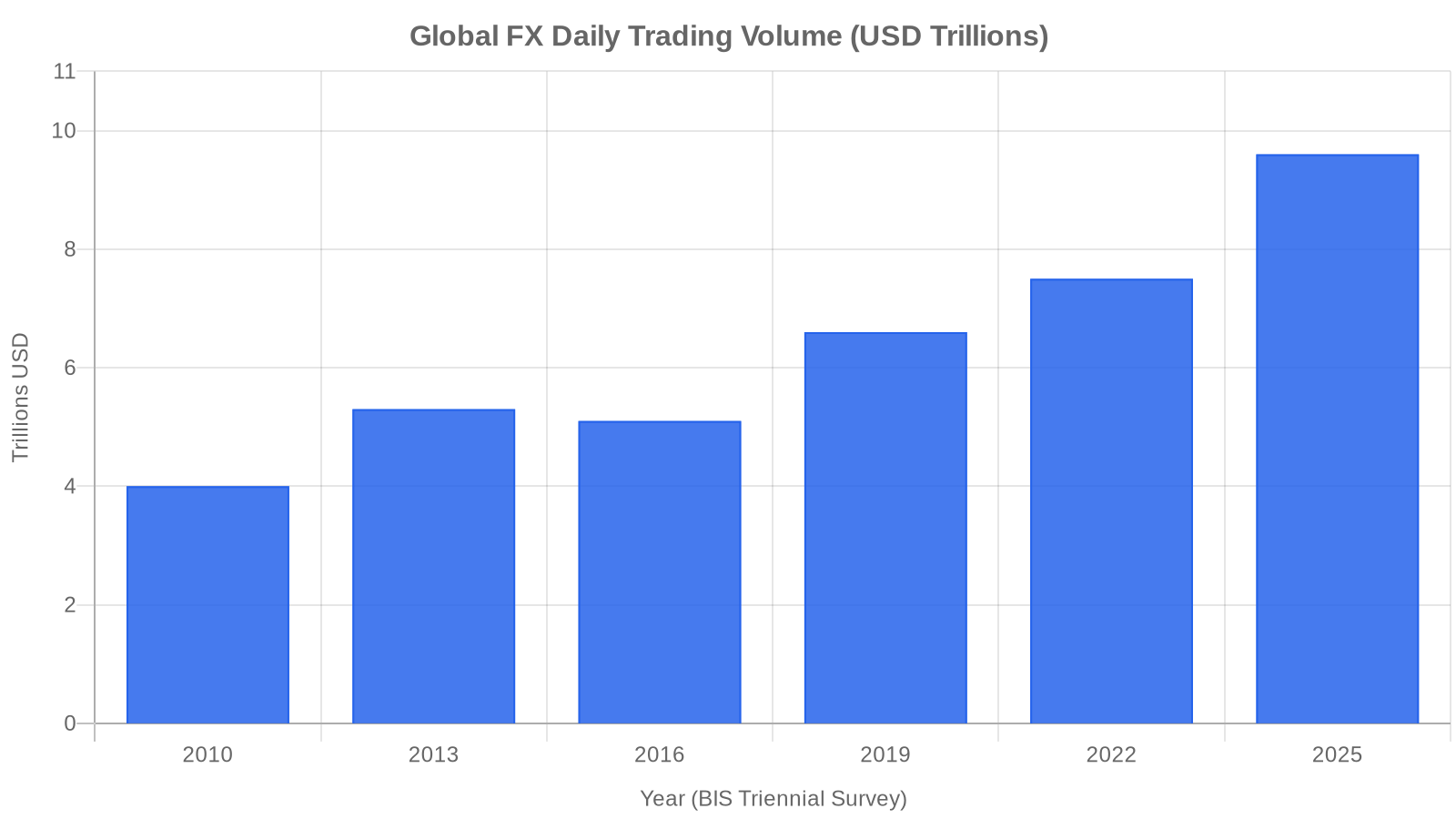
The Liquidity Advantage: What $9.6 Trillion a Day Buys You
A large retail order in a mid-cap stock can move the price against itself during execution. In EUR/USD, this cannot happen: roughly $1 trillion changes hands in this pair every day, per the same BIS survey, which is why spreads on major pairs run 0.5-2 pips and sit below 0.5 on raw-spread accounts.
Depth means entering and exiting quickly with minimal slippage. You are not big enough to move the market, which sounds deflating but means your orders fill cleanly. For anyone running tight stop-losses that have real value, our forex broker reviews cover execution quality and spread consistency.
Can You Really Trade Forex 24 Hours a Day?
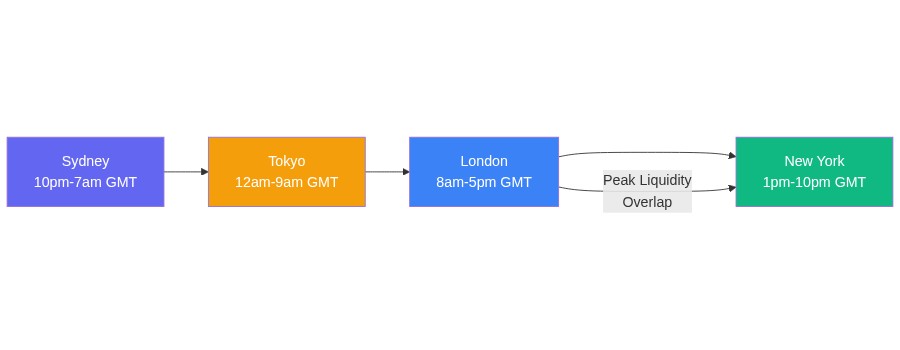
Yes, with one qualifier: 24/5, not 24/7. The market runs from Sunday 10 pm GMT to Friday 10 pm GMT, continuously across four sessions as the globe turns. The UK alone accounts for 37.8% of global FX activity, making London the largest forex centre by volume, per BIS survey.
The sessions break down roughly like this:
- Sydney opens Sunday 10 pm GMT. Relatively low volume, mainly AUD and NZD pairs.
- Tokyo opens at midnight GMT. Volume picks up in JPY, AUD, and NZD.
- London opens at 8 am GMT. The deepest pool of liquidity in the world.
- New York opens at 1 pm GMT, overlapping London until 5 pm.
The London-New York overlap is when spreads are tightest and order books deepest, which is why most retail activity concentrates there. Outside peak hours, particularly Friday afternoons and Sunday evenings, spreads widen and the market thins enough that price gaps become a real risk.
Round-the-clock access matters most for people who cannot trade during standard exchange hours. A trader in Singapore who wants EUR/USD exposure without setting an alarm for 3 am has that option, and equities do not offer it.
What Does It Actually Cost to Trade Forex?
Less than most markets, and not zero. A major pair spreads 0.5-2 pips in normal conditions, with no exchange fees or clearing fees, and, on standard accounts, there is no separate commission. The broker's margin comes from the spread. Four components make up the cost:
- The spread: 0.5- 2 pips on majors, wider on crosses and exotics.
- Commission, on ECN or raw-spread accounts. Typically a flat $3–7 per standard lot, in exchange for near-zero spreads.
- Overnight financing, the swap charged or credited on positions held past rollover. This is overlooked by most "tight spread" marketing, and the cost that quietly decides whether a multi-day position is worth holding.
- Event slippage: A 0.8-pip EUR/USD spread can jump to 5-10 pips around a surprise rate decision or major data release.
Equity trading usually means a commission per trade plus the spread, so for active forex traders the cost per unit of exposure is typically lower. Before sizing anything, work through how much to risk per trade, as position size drives cost far more than the spread does.
The first time I traded through a non-farm payrolls release, my "cheap" 0.8-pip spread on EUR/USD turned into 8 pips for about ninety seconds. The fill price was nowhere near what I had anticipated. I had read about widening spreads in advance and still underestimated it. Now, I either close positions before scheduled releases or size for the worst-case spread rather than the typical one.
How Does Leverage Work in Forex, and When Does It Blow Up?
A €1,000 account at 30:1 controls a €30,000 position. A 1% move the wrong way takes roughly a third of the margin, before you have paid a spread. That is why regulators cap it. Under ESMA's 2018 product intervention rules, 30:1 is the EU maximum on major pairs; the US permits more under CFTC and NFA rules.
The maths is unforgiving in one way. At 50:1, a 2% adverse move clears the account entirely. That is uncommon on a quiet day in EUR/USD and far more plausible around a surprise rate decision, which is when oversized accounts get taken out.
"My experience with novice traders is that they trade three to five times too big. They are taking 5 to 10 percent risks on a trade when they should be taking 1 to 2 percent risks."
— Bruce Kovner, founder of Caxton Associates
Leverage assumes importance as EUR/USD rarely moves 1% in a day; the average daily range is closer to 0.5-0.8%. At 5:1-10:1, a trader with limited capital can still size positions properly. The ceiling regulators set is the maximum available, not the recommended setting. So why does almost everyone start at the ceiling? Because the platform offers it by default, and nothing on the screen suggests otherwise. This gap is a reason the loss statistics appear the way they do.
Going Long and Short Without the Borrow Cost
Short-selling a US equity entails a stock-loan fee and a locate requirement. Shorting a currency pair carries neither, at any size. Forex is a pairs market, so every position is simultaneously long one currency and short another. In stocks, short selling comes with friction: shares must be available to borrow, borrow costs accrue daily, and during a squeeze losses are theoretically unlimited. In forex, going short is structurally identical to going long, with no borrow cost, without availability constraints, and the same execution mechanics.
EUR/USD is simply the price of one euro expressed in US dollars. Think the euro will strengthen and you go long, buying the pair. Think the dollar will strengthen and you go short, selling it. Either direction takes the same number of clicks.
The hedging use case follows. An importer who owes US dollars in three months is already short dollars. Buying that dollar exposure forward against the euro locks in today's rate and removes most of the currency risk.
How Does Forex Compare to Stocks, Crypto and Futures?
Different tools for different purposes. Chart reading, risk management, and position sizing - all of these transfer between them, but structural differences decide which market fits which goal. Retail crypto leverage runs as high as 100:1 against forex's 30:1 EU ceiling, and this gap explains the difference in how fast accounts fail in each.
| Factor | Forex | Stocks | Crypto | Futures |
|---|---|---|---|---|
| Trading hours | 24/5 | Exchange hours | 24/7 | Varies by contract |
| Max leverage (retail) | 10-50:1 | 2-5:1 | 2-100:1 | 10-20:1 |
| Transaction costs | Spread (0.5-2 pips) | Commission + spread | Spread + exchange fees | Commission + exchange fees |
| Short selling | Simple, no borrow cost | Requires share borrow | Simple via derivatives | Simple |
| Daily market volume | $9.6T | ~$500B global equities | ~$50–100B | ~$50B+ |
| Regulatory framework | Multi-jurisdiction, OTC | Generally well-regulated | Variable | Well-regulated |
Volumes: BIS Triennial Survey 2025 (forex); Leverage caps: - ESMA, CFTC/NFA, and exchange rulebooks
Crypto's 24/7 availability sounds appealing until the Sunday night illiquidity window, where thin books mean a stop-loss may not fill near where you set it. Stocks offer what forex does not: equity ownership with long-term value accumulation, so over a decade they fit better. Futures sit closest to forex on leverage and short mechanics, but trade on a centralised exchange with standardised contracts and expiry dates.
What Are the Risks of Forex Trading?
ESMA tracks retail loss rates across licensed CFD and forex providers, and the range cited in the introduction holds across brokers and reporting periods. ASIC report also showed that 68% of Australian retail CFD clients lost money net of fees. This is not a statistical outlier. It is consistent across every major regulated market where disclosure is mandated.
Four causes account for most of it:
- Leverage misuse drives most account blow-ups. Traders take the maximum available without understanding that a 1-2% adverse move can wipe a significant portion of the margin. ESMA imposed caps in 2018 specifically because of the damage higher leverage was doing.
- Overtrading is another pattern. A 24/5 market implies there is always something to react to, and experienced traders know that being out of a trade is itself a position. Beginners barely learn this before losing money on it.
- Broker quality matters more in forex than in equities, precisely because the OTC structure allows greater variation. A poorly regulated or offshore broker can widen spreads arbitrarily, delay execution, or create obstacles to withdrawals. Verify licence numbers directly on the FCA register before depositing.
- Macro unpredictability is the fourth pattern. A central bank surprise, a political shock, or a flight to safety can gap currencies straight through a stop-loss in ways liquid equities rarely do. You must know what moves exchange rates before committing capital.
In a market that never closes, the discipline being tested is attendance rather than analysis.
The Bottom Line: Who Should Trade Forex
It is quite an accessible market with noticeable advantages: liquidity depth, 24/5 access, low transaction costs, two-way positions, and leverage tools not widely available elsewhere. For traders who want shorter-term, actively managed exposure and treat risk management as non-negotiable, the case must be considered.
It is a poor fit for anyone seeking long-term asset appreciation, since currencies do not compound the way equities do. It is equally poor for anyone planning to use maximum leverage without a disciplined stop-loss. Those odds are structural rather than a technique gap. Discipline shifts them at the margin and does not reverse them.
A sensible first step is comparing forex brokers to find the ones regulated by top-tier authorities such as the FCA or ASIC, or atleast an EU regulator such as CySEC. Then spend time on a demo account, which is useful for testing mechanics but will not replicate real slippage or the pressure of live capital.
Frequently Asked Questions
What Is the Minimum Amount to Start Forex Trading?
Some brokers open accounts from $10-50, though micro accounts at $100–500 are more practical. The minimum is less important than whether your capital supports sensible position sizing. Risking 1-2% per trade on a $100 balance means risking a dollar or two, too small for most stop distances to work. A realistic starting point sits closer to $500-2,000.
Is Forex Trading Legal?
Retail forex trading is legal and regulated in the EU, UK, US, and Australia, each under a named authority: national regulators implementing ESMA rules, the FCA, the CFTC and NFA, and ASIC. Several jurisdictions restrict retail forex CFDs while permitting spot trading, leverage caps differ by region, and a few countries prohibit retail margin forex outright. You must confirm your broker's licence number on the regulator's own public register rather than on the broker's marketing page. Cloned-firm fraud is common enough that regulators publish warning lists for it.
What Is the Best Time to Trade Forex?
The best time to trade forex depends on the pair. Liquidity peaks while a pair's home session is open, so match the pair to the hours you actually have rather than forcing yourself into the busiest window. A trader who can only sit down at 11 pm GMT does better learning how JPY crosses behave in the Tokyo session than trading EUR/USD badly at the London open.
Why Do So Many Forex Traders Lose Money?
ESMA's published supervision data, linked earlier in this article, puts the retail loss rate between 74% and 89% of accounts, driven mainly by leverage misuse, overtrading, weak risk management and poorly regulated brokers. The more useful question is what separates the minority who do not lose. The answer is unglamorous: low leverage of 5:1-10:1, a fixed percentage risked per trade, and a written plan followed through drawdowns.
Can I Practise Forex Without Risking Money?
Most regulated brokers offer free demo accounts that simulate live conditions with virtual funds, and they are worth using before any deposit. A demo replicates platform mechanics well: order types, charting, position sizing and stop-loss behaviour. But it cannot replicate actual slippage during volatile releases, or the pressure of watching real money move against you. Demo results often do not survive contact with a funded account, and this gap is important information.
